
BetPanda Registration and KYC: Sign-Up, Verification and Withdrawals
 Available in GB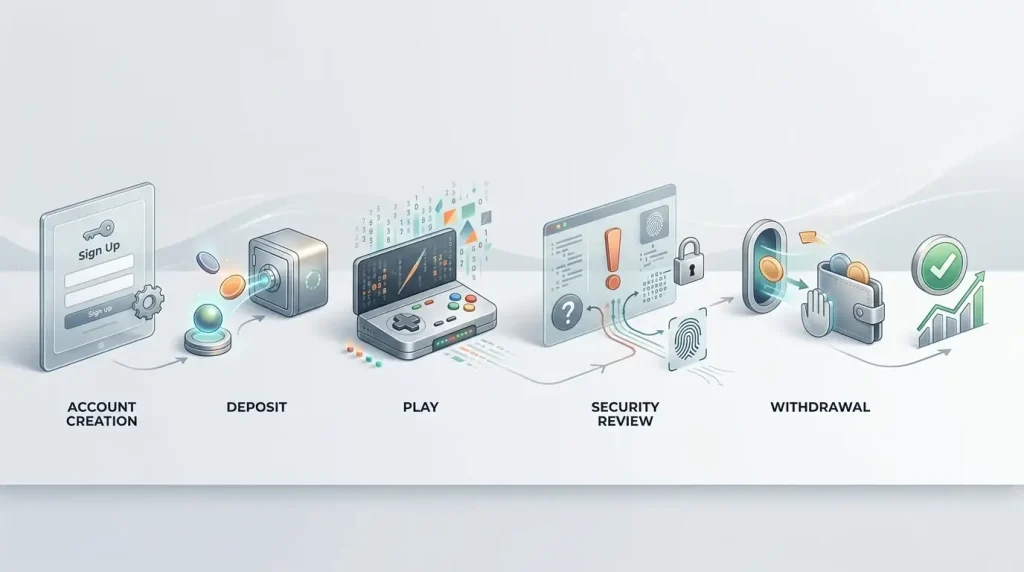
BetPanda uses a light or risk-based verification model and may request identity checks. That means the brand should not be described as guaranteed “no-KYC”. Registration can be relatively light, but a later account review, security event or withdrawal can still bring a verification request. The exact trigger is not publicly established and can vary by account circumstances.
For a UK reader, the useful distinction is between opening an account and remaining permanently exempt from checks. Those are not the same claim. Sign-up details should stay consistent, and KYC can enter the account journey later, including around withdrawals. No sufficiently direct current official source establishes a universal document list or a guaranteed verification time.
Table of Contents
- BetPanda registration is only the start of the account journey
- What risk-based KYC means in practice
- Why there is no fixed BetPanda KYC document checklist
- Registration details should stay consistent with later payment activity
- Why withdrawals can be the point where KYC becomes visible
- No-KYC claims need a precise definition
- Self-exclusion is available, but it is not the same as GAMSTOP
- A UK benchmark that does not automatically apply to BetPanda
- How to respond if BetPanda requests verification
- Registration mistakes that can create avoidable friction
- What to check before depositing after sign-up
- When BetPanda may ask for KYC before or during a UK player’s cashout
- Recommend
BetPanda registration is only the start of the account journey
Account creation establishes the credentials and profile that BetPanda uses to recognise you. The practical goal should be accuracy rather than speed. Enter information that you can continue to support later if a security or identity check is triggered, and use an email address or other login channel you control securely.
Do not treat a short registration form as proof that the account will never be reviewed. A risk-based model means the level of friction can change as the relationship develops. Deposits, withdrawals, unusual account activity or other risk signals can lead to additional checks even when the opening step was simple.
If you plan to use the service mainly on a phone, the BetPanda mobile casino guide explains the browser/PWA access model. Registration does not require a native iOS or Google Play application.
What risk-based KYC means in practice
Risk-based verification is not the same as mandatory full identity verification for every user at the first click, and it is not the same as a promise that nobody will ever be verified. It means checks can be triggered according to the operator’s controls and the circumstances of the account.
The verified position is clear: BetPanda may request identity checks. It does not support a universal promise that all accounts can deposit, play and withdraw forever without providing identity information. Marketing language around privacy or light onboarding should therefore be read separately from the operator’s ability to request verification.
From a player’s perspective, the safest assumption is that verification may happen. Keep account details accurate and avoid using information that you could not explain later. If a check is requested, use the current official account channel rather than sending personal documents to an address or person found through an unrelated forum.
Why there is no fixed BetPanda KYC document checklist
KYC document requirements can change and can vary with the reason for the account check. A generic list copied from another casino is not reliable evidence of what BetPanda will ask from a particular account. The same applies to claims that verification always finishes within a set number of minutes or hours.
A passport, driving licence, utility bill, selfie or source-of-funds record should not be presented as universally required by BetPanda. Those are common categories in wider identity-verification processes, but common practice does not establish BetPanda’s current requirements for every account.
If a request appears, read the instructions inside the official account flow and provide only what the current request asks for. If something is unclear, ask official support what the request is for before uploading sensitive information.
Registration details should stay consistent with later payment activity
Even with crypto-first payments, account consistency matters. A profile that changes repeatedly or conflicts with later information can create avoidable friction. Use your real details where the site asks for them, keep access to the registered communication channel, and do not create a trail that is difficult to explain if the account is reviewed.
The BetPanda payments guide covers the payment model in more detail. From an account perspective, the important point is to keep clear records of deposits and withdrawals and know which wallet or exchange you used. Those records can help you understand a transaction history if a security review occurs.
Do not share wallet seed phrases or private keys as part of account verification. Those credentials control the wallet itself and are not normal evidence of identity or transaction ownership.
Why withdrawals can be the point where KYC becomes visible
A withdrawal changes the risk profile of an account because value is leaving the platform. Identity checks may be requested, so it is reasonable to prepare for the possibility that a cashout can coincide with an account review. That does not mean every withdrawal will trigger KYC.
The BetPanda withdrawals guide separates account review, operator processing and blockchain confirmation. If a cashout is delayed, determine which stage you are actually in. A request for account verification is different from a transaction that has already been broadcast and is waiting for network confirmations.
Planning for this possibility is better than treating verification as a surprise. Before you deposit, make sure you could still access the account and registered contact method later, and keep a record of the wallets involved.
No-KYC claims need a precise definition
The phrase “no-KYC casino” can describe several very different situations. It might mean no mandatory identity upload at initial registration. It might mean many users can transact without a routine document check. Or it might be used too broadly to suggest that the operator has no ability to ask for identity information at all.
For BetPanda, the final interpretation is not supported. The current evidence says verification is light or risk-based and identity checks may be requested. A responsible description should therefore avoid promising permanent anonymity or guaranteed document-free withdrawals.
This distinction is especially useful when comparing reviews. A review can be technically correct that sign-up is light while still being misleading if it turns that observation into an absolute statement about every later account event.
Self-exclusion is available, but it is not the same as GAMSTOP
Self-exclusion is available at BetPanda. If gambling is becoming difficult to control, an account-level self-exclusion tool can be an important step. It should not, however, be confused with a claim that UKGC or GAMSTOP protections apply to BetPanda.
Self-exclusion at BetPanda should not be taken as evidence of UK regulatory protection. Broader licensing and regulatory coverage is addressed separately on the trust page.
If you choose self-exclusion, treat it as a firm boundary rather than a temporary cooling-off trick. Do not create replacement accounts or look for ways around a restriction you deliberately put in place.
A UK benchmark that does not automatically apply to BetPanda
For context, covered UK Gambling Commission remote licensees conduct light-touch financial vulnerability checks once net deposits exceed £150 in a rolling 30-day period. That is a rule for operators within the relevant UKGC framework. It should not be read as a statement that BetPanda uses that same threshold or that UKGC processes apply to a BetPanda account.
The distinction matters because readers can otherwise import expectations from one regulatory system into a different product. Use the £150 figure only as a UK-regulated market benchmark, not as a trigger prediction for this brand.
BetPanda’s own verification triggers are not published here as fixed thresholds because the available evidence does not support doing so.
How to respond if BetPanda requests verification
First, confirm that the request is visible through an official BetPanda account or support route. Read exactly what is being requested and why. Do not send more personal data than the stated process requires, and do not send sensitive identity material to a contact reached through social media or an unrelated messaging account.
Second, keep copies of what you submit and note when you submitted it. That creates a record if verification takes longer than expected. Third, separate account verification from blockchain troubleshooting: if a withdrawal has not yet been released, identity review can be relevant; once a transaction is on-chain, the transaction hash and network status become the important evidence.
No reliable universal verification turnaround time is established. Current account-specific instructions are more useful than an old generic estimate.
Registration mistakes that can create avoidable friction
- Using inaccessible contact details: losing access to the registered email can complicate account recovery or review.
- Entering inconsistent personal information: later corrections can make an account harder to verify.
- Assuming crypto removes all identity checks: a crypto payment model does not guarantee permanent exemption from KYC.
- Relying on an unofficial verification contact: sensitive documents should stay inside current official channels.
- Ignoring withdrawal preparation: keeping wallet and transaction records can make later questions easier to answer.
Most of these points are basic account hygiene, but they matter more when a service uses triggered rather than uniformly front-loaded verification. A low-friction opening process rewards careful record keeping because the deeper review may come later.
What to check before depositing after sign-up
Once the account is open, confirm the current cashier options rather than assuming a payment route from an old guide. Check the asset and network, understand where a future withdrawal would be sent, and keep enough information to recognise the transaction later. If the account displays any restriction or verification message, resolve it before committing more funds.
Also decide in advance what would cause you to stop playing. Deposit limits, session limits and self-exclusion are more useful when chosen before a stressful session than after a loss. Account controls are part of the registration decision, not an afterthought.
Finally, remember that a smooth registration is not evidence about the speed of a later withdrawal. Treat those as separate parts of the user journey.
When BetPanda may ask for KYC before or during a UK player’s cashout
The most accurate answer is conditional: BetPanda uses a light or risk-based verification model, and identity checks may be requested. Registration alone does not guarantee that a later cashout will remain document-free. A withdrawal or another account event can coincide with additional review, but there is no established universal trigger, document list or completion time.
Approach the account as if you may need to support it later: use consistent information, retain access to the registered contact method, keep transaction records and respond only through official channels. For the wider product context, return to the BetPanda review. For licensing and regulatory coverage, see the BetPanda licence page.